
The zero-divisor graph of a commutative ring
T. Asir, Pondicherry University (India)
Abstract: Over the past 20 years, research on algebraic structures using graph theory tools has become increasingly interesting. The interaction between a ring’s algebraic properties and the graph-theoretical properties of the corresponding graph is the subject of research on graphs made of rings. As an illustration, consider a ring’s zero-divisor graph. Results regarding the fundamental characteristics of the zero-divisor graphs of commutative rings are presented in this talk.
References
[1] D. F. Anderson, T. Asir, A. Badawi and T. Tamizh Chelvam, Graphs from rings, Springer, 2021.
[2] D.F. Anderson and P.S. Livingston, The zero-divisor graph of a commutative ring, J. Algebra, 217 (1999), 434–447.
[3] T. Ashitha, T. Asir, D. T. Hoang and M. R. Pournaki, Cohen-Macaulayness of a class of graphs versus the class of their complements, Discrete Math., 344 (2021), 112525.
[4] T. Asir and V. Rabikka, The Wiener Index of the Zero-Divisor graph of Zn, Discrete Appl. Math., 319 (2022) 461–471.
[5] T. Asir and K. Mano, Classification of rings with crosscap two class of graphs, Discrete Appl. Math., 265 (2019), 13–21.
On Subinjectivity Domains of Finitely Generated Modules
Salahattin Özdemir, Dokuz Eylül University (Türkiye)
Abstract: A module  is called FG-injective if every homomorphism from to a finitely generated module
  factors through an injective module, generalizing the injective modules properly. If the subinjectivity domain of consists of exactly the FG-injective modules, then is said to be fg-indigent. Properties of FG-injective modules and of fg-indigent modules are studied, and the concept of si-portfolio is considered for finitely generated modules. The collection of all subinjectivity domains of all finitely generated modules is also considered, and the cases where this collection forms a chain or has a single or two elements are investigated.
References
[1] R. Alizade, M. Diril and Y. Durğun, Subinjective portfolios and rings with a linearly ordered subinjective profile, Communications in Algebra 53 (1), (2025), 408-416.
[2] P. Aydoğdu and S. R. López-Permouth, An alternative perspective on injectivity of modules, Journal of Algebra, 338 (1), (2011), 207-219.
[3] C. Holston, S. R. López-Permouth, J. Mastromatteo and J. E. Simental-Rodriguez, An alternative pers- pective on projectivity of modules, Glasgow Math. J., 57 (1), (2015), 83-99.
[4] Y. Durğun and S. Özdemir, On subinjectivity domains of finitely generated modules, Communications in Algebra, (2025), 1–19. https://doi.org/10.1080/00927872.2025.2507144
Cohen-Macaulay and Gorenstein Properties of the Cozero-Divisor Graph of 
K. Akhil, Pondicherry University (India)
Abstract: Let  be an integer and let
 ![[n]^*=\{1,2,\ldots,n-1\}](https://quicklatex.com/cache3/e3/ql_827a1cfba93ab4cfcb6dff2cf158fde3_l3.png) . The cozero-divisor graph of is defined by taking as vertices all elements of
. The cozero-divisor graph of is defined by taking as vertices all elements of ![\{x \in [n]^* : \gcd(x, n)\neq 1\}](https://quicklatex.com/cache3/61/ql_89f7f515abd8e6b7c1858f9a2d1a7861_l3.png) , where two distinct vertices
, where two distinct vertices  and
and 
are adjacent if and only if  does not divide
  and does not divide . Using this construction, I will explain how algebraic methods can be applied to study graph-theoretic properties. In particular, I will present characterizations of well-coveredness, Cohen-Macaulayness, vertex-decomposability, and Gorensteinness of these graphs and their complements. These results yield large classes of Cohen-Macaulay and non-Cohen-Macaulay graphs, illustrating deep connections between number-theoretic properties of
  and the homological behavior of the associated cozero-divisor graph.
References
[1] T. Ashitha, T. Asir, D. T. Hoang, M. R. Pournaki, Cohen–Macaulayness of a class of graphs versus the class of their complements, Discrete Math. 344 (2021), no. 10, Paper No. 112525, 9 pp.
[2] T. Ashitha, T. Asir, M. R. Pournaki, A large class of graphs with a small subclass of Cohen-Macaulay members, Comm. Algebra 50 (2022), no. 12, 5080–5095.
[3] M. Afkhami, K. Khashyarmanesh, The cozero-divisor graph of a commutative ring, Southeast Asian Bull. Math. 35 (2011), 753–762.
[4] Morey, S., Villarreal, R., Edge ideals: algebraic and combinatorial properties. Progress in Commutative Algebra 1: Combinatorics and Homology. 1, 85-126 (2012)
[5] Villarreal, R.H.: Monomial Algebras. Monographs and Research Notes in Mathematics, 2nd edn. CRC Press, Boca Raton (2015)
[6] Villarreal, R.H.: Cohen–Macaulay graphs. Manuscripta Math. 66(3), 277–293 (1990)
On the Proper Flat Profiles of Some Classes of Modules
Zübeyir Türkoğlu, Dokuz Eylül University (Türkiye)
Abstract: One of the central topics in ring theory, module theory, and homological algebra is the characterization of rings in terms of whether certain classes of modules are projective, injective, or flat. In recent years, these notions have been studied from new perspectives, leading to alternative approaches and insights. In this context, dual interpretations of projectivity and injectivity have been investigated through the use of proper classes of short exact sequences.
In this talk, we introduce the concept of the right (or left) proper  -flat profile
  of a given class of right (or left) modules , defined as the class of proper classes generated flatly by each module in . We then focus on cases where the cardinality of the proper flat profile of all right modules is small (specifically 1, 2, or 3) and present certain characterizations of rings obtained via these profiles. In addition, we discuss structural results on rings under the condition that the proper flat profiles of all (finitely presented) right modules form a chain.
This is a joint work with Yılmaz Durğun, and Salahattin Özdemir. This study is supported by TÜBİTAK (Project no: 123F236).
References
[1] E. Büyükaşık, E. Enochs, J.R. García Rozas, G. Kafkas-Demirci, S. López-Permouth, and L. Oyonarte, Rugged modules: The opposite of flatness, Taylor & Francis, Communications in Algebra, 46, (2018), 764–779.
[2] Y. Durğun, On flatly generated proper classes of modules, World Scientific, Journal of Algebra and Its Applications, 15, (2024), 2550305.
[3] Y. Durğun, An alternative perspective on flatness of modules, World Scientific, Journal of Algebra and Its Applications, 15, (2016), 1650145.
Cohen-Macaulayness of class of circulant graphs
M. Ankitha, Pondicherry University (India)
Abstract: In this talk, well-covered and Cohen–Macaulay properties of a class of circulant graph is discussed, and providing classifications that distinguish large families of Cohen–Macaulay and non-Cohen–Macaulay graphs. For the integers  and
and 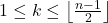 , define the set
![S_k = \{ x \in [n] : \left\lfloor \frac{n - 1}{2} \right\rfloor - k + 1 \leq x \leq \left\lceil \frac{n - 1}{2} \right\rceil + k \}.](https://quicklatex.com/cache3/32/ql_b64cd08b2d8cc607a6f926169002fc32_l3.png)
 is a simple graph with the vertex set
 ![[n] = \{0, \dots, n-1\}](https://quicklatex.com/cache3/88/ql_47656f05625359264cdd6e4702695888_l3.png) , where two distinct vertices and are adjacent if and only if either
, where two distinct vertices and are adjacent if and only if either  or
or  . Talk begins by explaining concepts and results needed for our discussion, after that main result alongwith examples will be dicussed.
References
[1] Ashitha, T., Asir, T., Hoang, D.T., Pournaki, M.R.: Cohen–Macaulayness of a class of Graphs versus the class of their Complements. Discrete Math. 344(10), 112525 (2021)
[2] Boros, E., Gurvich, V., Milanic, M.: On CIS circulants. Discrete Math. 318, 78–95 (2014)
[3] Brown, J., Hoshino, R.: Well-covered circulant graphs. Discrete Math. 311(4), 244–251 (2011)
[4] Chelvam, T.T., Mutharasu, S.: Total Domination in Circulant Graphs. Int. J. Open Problems Compt. Math. 4(2) (2011)
[5] Herzog, J., Hibi, T.: Monomial Ideals. Graduate Texts in Mathematics, Vol. 260. Springer-Verlag, London (2011)
[6] Herzog, J., Hibi, T., Zheng, X.: Cohen–Macaulay chordal graphs. J. Combin. Theory Ser. A 113(5), 911–916 (2006)
[7] Hoang, D.T., Maimani, H.R., Mousivand, A., Pournaki, M.R.: Cohen–Macaulayness of two classes of Circulant Graphs. J. Algebraic Combin. 53(3), 805-827 (2021)
[8] Morey, S., Villarreal, R., Edge ideals: algebraic and combinatorial properties. Progress in Commutative Algebra 1: Combinatorics and Homology. 1, 85-126 (2012)
[9] Villarreal, R.H.: Monomial Algebras. Monographs and Research Notes in Mathematics, 2nd edn. CRC Press, Boca Raton (2015)
[10] Villarreal, R.H.: Cohen–Macaulay graphs. Manuscripta Math. 66(3), 277–293 (1990)
Leavitt Path Algebras of Graphs Defined over Groups
Aslı Güçlükan İlhan, Dokuz Eylül University (Türkiye)
Abstract: Leavitt path algebras, introduced by Abrams–Aranda Pino and Ara–Moreno–Pardo, generalize Leavitt’s original constructions that lack the invariant basis number (IBN) property. This talk focuses on Leavitt path algebras of graphs defined over groups, highlighting recent results on their structural properties and the IBN condition. We also compute Grothendieck groups of algebras arising from power and punctured power graphs of cyclic groups of prime power order, based on joint work with Müge Kanuni Er and Ekrem Şimşek .
This work is supported by TÜBİTAK (MFAG/124F202).